
My ex-wife is originally from Birmingham.
That sounds like a simple fact. For years, it was one of the heaviest thoughts I carried. The version of events I ran in my head, the one I couldn't stop running, went like this: the marriage ends, she goes home, and she takes my boys with her.
I don't know if that would have happened. We never got that far. But the fear of it kept me in a marriage that had stopped working for four or five years. Years of next to no real communication inside our home. Years of putting a different face on the moment I stepped outside. Work, friends, family. Nobody would have known anything was wrong. You put the mask on. You get on with it.
Underneath all of it, every day, was one thought. I am not losing my children.
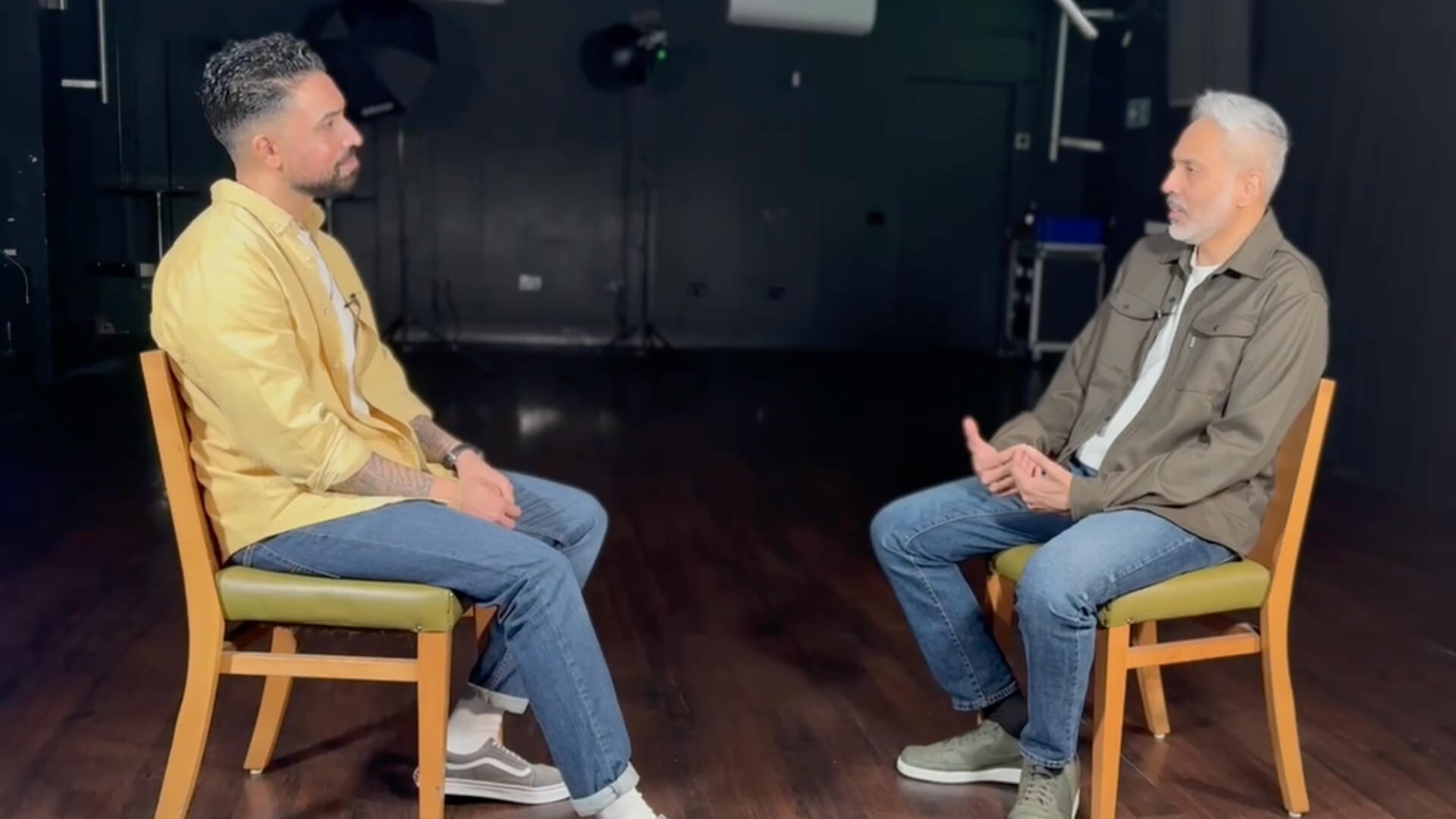
I'm Nemash. I'm 52 and I'm a single dad. Everything in this article comes from what I went through and from the conversations we've had with other dads through The Dad Project, men who lived through the same thing and were honest enough to say it out loud.
Why dads feel awkward asking for equal time
When Kiran's marriage ended, he knew from the first conversation what he wanted. He'd thought it through. He wanted 50/50, everything split down the middle, and that was the only arrangement he was prepared to accept.
And then he described feeling awkward about asking for it.
A dad wanting to be equally present in his child's life, feeling like he was asking for something he wasn't entitled to. That's what years of a particular story does to a man before he's even sat down across from his ex to have the conversation. Dads don't really want the kids. Dads are fine with every other weekend. Dads take what they're given.
Kiran put it plainly. You go into that discussion already knowing the script, and the script doesn't cast you as someone who should be asking for half. Society did that. Television did that. Generations of fathers who weren't particularly present did that, and left the rest of us inheriting the assumption.
I felt it too. When my marriage finally ended, there was a moment where I genuinely wasn't sure what I was entitled to ask for. I'd spent years working out every angle of the custody question in my head. I knew what I wanted. And I still hesitated.
That is what The Dad Project is for. Naming the specific, quiet ways that men are told to take less than they should. That's where the silence lives, and it lives there long before anyone sets foot in a mediation room.
What 50/50 custody actually means in England and Wales
There is no automatic legal right to equal custody for either parent in England and Wales. Courts make decisions based on the child's best interests, not on what each parent deserves or expects. A shared care arrangement, where a child spends roughly equal time with both parents, is achievable. It doesn't just happen because both parents want it.
What shared care looks like day to day
No two arrangements look exactly the same. Some families alternate full weeks. Some split school nights one way and weekends another. For me, I have my younger son roughly half the time. When he's with me: phone down, full attention, cooking his meals, ironing his clothes.
The other half of the week, I focus on myself. That took time to get comfortable with, and I'll come back to it.
Raj Dhesi, whose daughter was separated from him when she was just two weeks old, described going deep into his own legal research during the custody process, not just leaving it to his solicitor, but wanting to understand every angle himself. That's worth saying plainly for any dad reading this: know your rights. Your solicitor is doing their job. Nobody else in that process cares as much about the outcome as you do.
The weight of not knowing
Kiran's battle for 50/50 took two and a half years. Not two and a half years of court proceedings necessarily, but two and a half years of not knowing whether the thing he wanted most was going to happen. There were times he thought he was going to have to settle for less. There were times he nearly did.
That kind of prolonged uncertainty does something to you. The separation itself is one kind of pain. The waiting, watching months pass without resolution, not knowing what your life is actually going to look like, that is something else entirely.
For me, the uncertainty had a different shape. I spent years inside a marriage I knew was ending, staying because I was not going to be the dad who left. I wasn't going to give my boys that story. So I stayed. I cried in the shower every morning, because it was the only place nobody could see me. Then I put the mask back on and went to work.
When it finally ended, the fear didn't go away. It just moved. My biggest worry was geography. My ex could go back to Birmingham. The boys could be three hours away. I ran that scenario in my head so many times it became its own kind of exhaustion.
It didn't happen. But the fear was real. And plenty of men I've spoken to have gone through worse, who fought for years and still didn't get what they asked for.
The fear of losing your children is one of the loneliest things a man can carry, because it's almost impossible to say out loud without sounding like you're making it about yourself. So men carry it quietly. And it sits there, underneath everything else, for as long as it needs to.
It's also worth saying that not every separation becomes a battle. Naroop, who co-founded The Dad Project, and his ex agreed equal custody of their daughter Lara from the moment they separated. No mediation required. No years of waiting. They both put Lara first and made a decision together. Naroop says he's probably more present with her now than most fathers in an intact relationship, because having her only half the week means that half has to count. That is the ideal outcome. It doesn't always happen that way. But knowing it's possible matters.
The guilt in the time apart
Even when you have your arrangement in place, even when things are working, the guilt comes for you.
The first time my sons went back to his mum's and I sat in a quiet house, I didn't know what to do with myself. You keep checking your phone. You want to know if they're okay, what they're eating, whether they're thinking about you. That background noise of not being there is constant at first.
Someone gave me advice early on that I've come back to many times. Treasure the time you have alone, they said. That's when you rebuild your life. Using that time well isn't selfish. It's the only way you come back to your children as someone worth coming back to.
What Kiran, Raj and Aaron found
Kiran walked into the custody conversation with one thing in his mind and never moved off it. Two and a half years. He kept his position through mediation after mediation. He looked at it from his ex-wife's perspective, tried to understand what she was losing in the arrangement, and kept his eye on what mattered: his son Dylan needed him there, equally and consistently, and that was not negotiable.
What Kiran also did was reframe the whole thing for Dylan. His son is autistic, and routine is everything for him. Kiran bought a house with the same layout as the family home so Dylan would feel safe the first night he stayed there. He framed having two homes as having two of everything. Two bedrooms, two cars. The luckiest boy in the world. Dylan walked in and took to it immediately. Kiran described the weight lifting off his shoulders in that moment. All of the worry, just gone.
Raj Dhesi did his own legal research alongside everything else he was going through, because he wanted to understand every option rather than wait to be told what was possible.
Aaron Dale, who built a parenting platform with well over half a million followers on the back of his own single-dad experience, said something that stuck with me. He has every other weekend with his younger son as the formal arrangement. But as he put it: that's the least he'll see him, not the most. He picks him up from school during the week. He calls most days. He shows up in between. The schedule tells you the minimum. It doesn't cap anything.
What it looks like now
For me, it looks like this.
My younger son is still on the formal arrangement. When he's with me, I'm all in. We eat together. I know that sounds like a small thing, but it matters to me in a way I can't fully explain. I was probably a bit absent during my marriage. Not physically. In my head. I was there but not really there. That's different now.
Kian, my eldest, is 19. He's in his second year at university. When he comes back, he doesn't stay with me the way the arrangement used to work. His mum's house is where he grew up, where most of his childhood is. That's where he goes. I've made my peace with that, and I think it's right. What matters is that he comes to me because he wants to. We watch the football together. We go away sometimes. We're on WhatsApp every day. We're close. That's not a custody document keeping us connected. That's just us.
I think that's what the fight was actually for. Not the arrangement on paper. The relationship underneath it. You fight for the time because the time is how you build something that eventually doesn't need a document at all.
Raj Dhesi told me his daughter is happy when she's with him, and happy when she's with her mum. That's all he ever wanted. It took a long time to get there. But that's where he is.
There's no clean version of 50/50. Kiran still has hard days. I still have them. There are moments when you sit with the quiet of an empty house and it doesn't feel like freedom. But there are also moments when your son calls you unprompted, when he catches you doing something and just looks at you in a way that tells you he's proud of you, even if neither of you ever says it out loud.
Those moments are what the fight was for.
Key takeaways
- In England and Wales, there is no automatic legal right to equal custody for either parent. Courts decide on the basis of the child's best interests.
- Many dads feel reluctant to ask for equal time because the assumption that mothers are the primary carer runs deep in culture, media and family history.
- The custody process can take months or years when parents disagree. Knowing your rights and being consistent in what you ask for matters.
- Where both parents can agree from the start, as Naroop and his ex did for their daughter Lara, equal custody can be settled without a legal battle. That is worth knowing.
- The formal custody schedule is a minimum, not a ceiling. The relationship you build with your children is not bound by an arrangement document.
- Using the time apart for your own physical and mental health makes you a better parent in the time you have.
- Arrangements evolve as children grow. The goal isn't to maintain a legal structure forever, it's to build a relationship strong enough that the structure eventually becomes irrelevant.
Frequently asked questions about 50/50 custody in the UK
Do dads have a legal right to 50/50 custody in the UK?
No. In England and Wales, there is no automatic right to equal custody for either parent. Courts make decisions based on the child's best interests. A shared care arrangement is achievable, but it requires both parents to agree or a court to order it. Neither outcome is guaranteed without effort. GOV.UK has a plain-English guide to parental responsibility here.
How long does it take to agree 50/50 custody?
It varies significantly. When both parents agree early, arrangements can be formalised relatively quickly, as Naroop and his ex found when they agreed equal custody of their daughter Lara from the point of separation. When there is disagreement, the process can stretch over months or years. Kiran Dhilan, fought for equal custody of his son for two and a half years before it was settled at the final mediation before court proceedings would have begun.
What should a dad do if he wants equal custody but his ex disagrees?
Get proper legal advice early and do your own research rather than relying entirely on others. Go in with a clear, consistent position. Mediation is usually required before any court application. Families Need Fathers offers free advice and peer support specifically for dads navigating custody disputes in the UK.
Does 50/50 mean the child splits time exactly equally?
Not necessarily to the day. Common arrangements include alternating full weeks or splitting school nights and weekends differently. What matters more than the precise split is that both parents are consistently present and that the arrangement works around the child's routine, particularly where a child has additional needs.
How do you help a child adjust to living between two homes?
Routine and consistency matter above almost everything else. Kiran bought a new house with the same internal layout as the family home to help his autistic son feel safe from the first night. The language you use matters too. Kiran framed it for his son as having two of everything. His son walked in and took to it immediately.
Do custody arrangements change as children get older?
Yes, and that's normal. Formal arrangements that work well when children are young often become more flexible as they grow up. Nemash's eldest son Kian is now 19 and at university. He doesn't follow a set schedule any more. He comes over when he wants, to watch football, for days out, for whatever's happening. They talk every day. The structure changed. The relationship didn't.
Is there support available for single dads going through custody disputes?
Families Need Fathers offers advice and peer support specifically for fathers navigating custody in the UK. The Family Rights Group. also has useful guidance on legal rights. Your GP is a starting point if the process is affecting your mental health, and it usually does.