Originally published as a LinkedIn article by Nemash Patel. Read the original here.
At a glance:
- Amy Watson founded HASSL (Harassment Awareness & Safe Space Leaders) in October 2024, days after a train harassment post she wrote went viral
- HASSL now has 3,000+ ambassadors including over 1,000 men, and its campaigns have reached 20 million+ views (source)
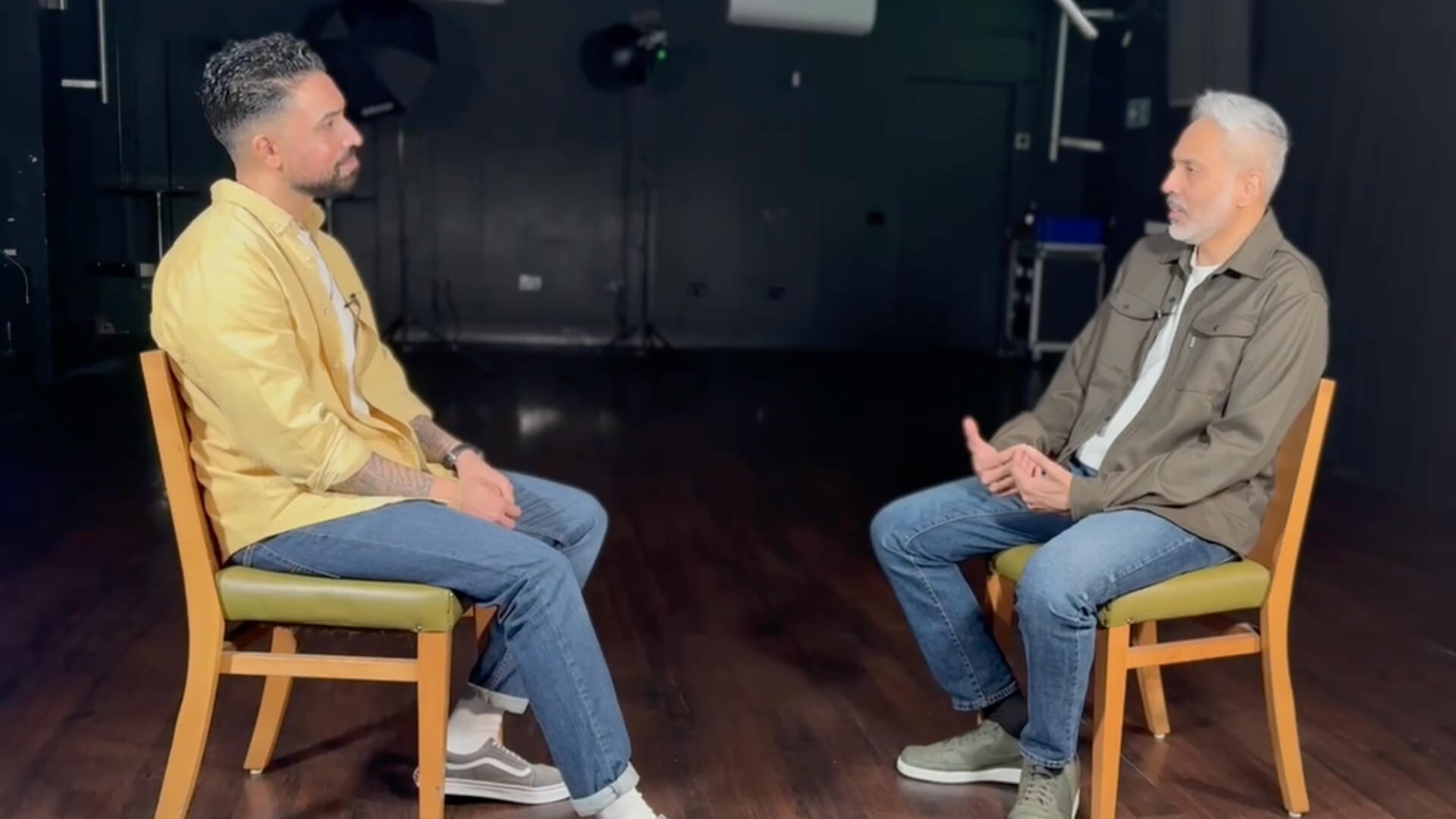
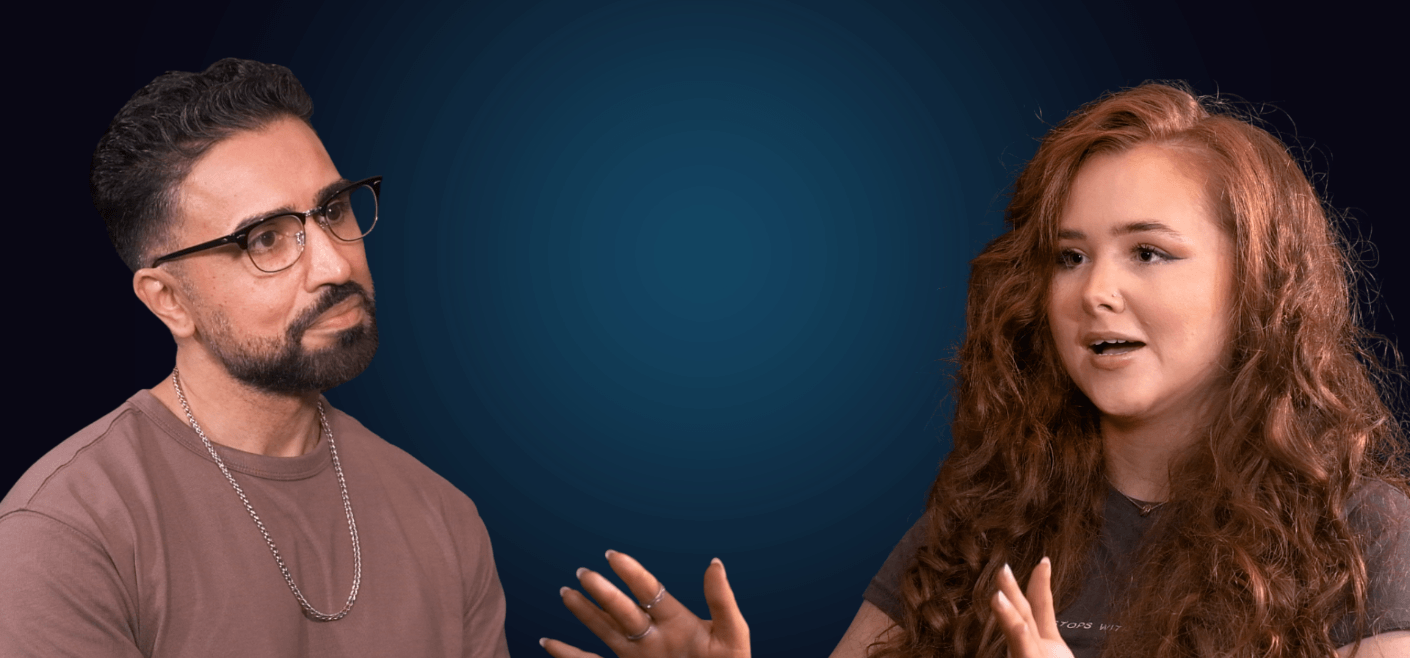
- Nemash spoke to Amy on Episode 31 of The Dad Project, and filming it changed how he sees what women deal with every day
She walked into the office furious.
This was real anger, not the kind people perform for an audience or soften before posting about later. It is the kind that only shows up when something happens again that should never happen at all.
I was in the room for it.
We shared office space at Huckletree in White City. Amy Watson was COO of OptimallyMe, a company we worked with at Push, and I remember the morning clearly because nobody in that office had seen her like that before.
The night before, on her commute home, a man had followed her down the platform, sat next to her on the train, and started asking her name and where she worked. She stayed calm. She stayed polite. That is what most women learn to do. When she stood to leave, he grabbed her hand. Nobody helped.
She wrote about it on LinkedIn. A lot of people shared it.
What most of those people never saw was what came next, in an office in White City, in the days that followed. That was the moment everything after it traces back to.
What is HASSL, and why did Amy Watson build it?
In October 2024, Amy founded HASSL, which stands for Harassment Awareness & Safe Space Leaders. It is a social enterprise, not a charity, and it started with three people and no corporate backing.
The mission is printed plainly across everything they do: fix the culture, not women.
That line matters more than it first reads. Most safety advice aimed at women is really just a longer list of things to avoid, routes to change, times not to travel, clothes not to wear. HASSL's position is that none of that fixes anything. It just moves the weight around. Their focus instead is on the culture that makes the behaviour normal in the first place, which is a culture men have a direct hand in shaping.
In under two years, HASSL has built ambassadors in the thousands, more than a thousand of them men, and campaigns that have reached tens of millions of views (source). None of it happened the way people assume overnight platforms happen.
Who else built this, and why does that matter to me?
Also in that office at the time was Carla Sayers, who now runs all social media for HASSL. She recently marked a year there.
Carla and Amy knew each other well before any of this started. What they have built together is worth paying proper attention to, because a lot of HASSL's reach, the campaigns, the millions of views, the tone of voice that makes people stop scrolling, has Carla's work behind it. The kind of work that rarely gets a name attached to it.
I met Carla properly during the podcast filming, and we got talking afterwards. There is a particular kind of recognition that happens between two people who work behind the scenes on something they actually believe in. You clock it in each other fairly quickly.
She has spoken openly about what it is like to manage the online presence of a movement that regularly attracts hostility, including the specific irony of being harassed for calling out harassment. Fielding hundreds of hostile comments on a single post, in a single day, and still turning up the next day to do it again.
I do a version of that work for The Dad Project. The planning, the editing, the part that never gets seen. We keep going for the same reason. We believe in what we are building.
That is not a shared understanding you find everywhere.
Why do most men not notice what women deal with every day?
The Dad Project exists to have honest conversations with men about being present, as fathers and as people. Amy's work looks like it sits outside that territory until you look at it closely.
Harassment does not happen in a vacuum. It happens inside cultures that men help shape, sometimes by what they do, and just as often by what they let slide without noticing.
HASSL runs a specific programme for men. The programme is not built to centre men in the conversation or lecture them. It gives them something real and practical to do instead.
That is the part I think matters most to the men listening to this podcast.
What did filming this episode actually change for me?
Before we recorded, Amy told me what things looked like for her before HASSL existed. She had a good job in London and a nagging sense that something was still missing. She traces a lot of that back to COVID, to a year of plans that collapsed overnight and a spontaneous move to London that never got reversed. She credits her parents for the values that eventually pointed her toward social impact work, long before she had a name for what that would become.
Later in the conversation, she said something that has stuck with me since. She talked about the difference between demanding perfection from people and asking for progress. About how it is easy to write someone off the moment they say something clumsy or badly worded, and how that instinct, as satisfying as it feels, rarely changes anything. Her point was that if a man is asking a question at all, even an awkward one, there is a part of him that already wants to do better. Punishing that instinct just teaches him to stop asking.
I found that harder to sit with than I expected, because I recognised exactly how easy it is to get that wrong myself.
Filming the episode gave me a real look at the calculation that goes on underneath a woman's day that most men never have to run. Which train carriage. Whether to go to a networking event alone. What to do with your eyes and your pace when someone stands too close on a platform. That is constant, quiet risk assessment that most men never have to carry, because nobody ever taught us we needed to.
That realisation stayed with me for days after we stopped filming. Honest ones usually do.
Key takeaways
- Amy Watson founded HASSL in October 2024, days after a harassment incident on her commute became a widely shared LinkedIn post
- HASSL's core position is that safety is a cultural responsibility, not something women should have to manage alone, summed up as "fix the culture, not women"
- The organisation has grown to thousands of ambassadors, including over a thousand men, with campaigns reaching tens of millions of views
- Much of HASSL's public reach comes from behind-the-scenes work, including Carla Sayers' social media output, which rarely gets individual credit
- Filming this episode showed me a version of daily risk assessment that most men never have to think about, let alone carry
- HASSL runs a specific programme aimed at men, built around practical action rather than lecturing or centring men in the conversation
Frequently asked questions
What does HASSL stand for?
HASSL stands for Harassment Awareness & Safe Space Leaders, a UK social enterprise founded by Amy Watson in October 2024.
Is HASSL a charity?
No. HASSL is a social enterprise, not a registered charity. It has addressed this choice directly on its own site (source).
What does "fix the culture, not women" mean?
It means HASSL's approach focuses on changing the behaviour and norms that allow harassment to happen, rather than putting the burden on women to manage their own safety through avoidance, vigilance, or changed routines.
Does HASSL work with men specifically?
Yes. HASSL runs a programme aimed at men, designed to give them practical, non-lecturing ways to be part of the culture shift rather than positioning men only as the problem or leaving them out of the solution entirely.
How did The Dad Project come to interview Amy Watson?
Nemash Patel, co-founder of The Dad Project, knew Amy Watson from working alongside her at Push, where she was COO of OptimallyMe, a company they supported. He watched HASSL grow from the very beginning and later invited her onto the podcast, recorded at The Old Court in Windsor.
How big has HASSL grown since it launched?
As of its most recent public Impact page, HASSL reports 3,000+ ambassadors, including over 1,000 men, and campaigns that have reached more than 20 million views (source).
Where can I listen to the full episode with Amy Watson?
The full conversation is live on YouTube, and will also sit on Episode 31's page once the site is live.
I have two sons. One is at university now, the other still working out who he wants to be.
I do not know yet how to teach either of them the exact weight of what Amy described, the platform calculations, the walk home planned three streets out of the way. I am not sure it can be taught in a single conversation, or that it should be.
What I do know is that I want them to notice it, quietly, because they were paying attention, in a way I was not, for most of my life.
That is a small thing to ask of two young men. It might also be the whole point.